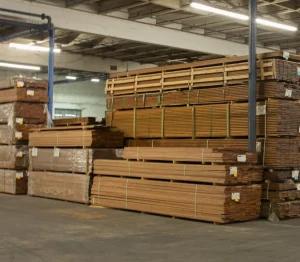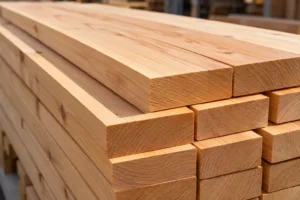


When choosing lumber for a construction, furniture, flooring, or woodworking project, the way the wood is dried can be just as important as the species you choose. Two common drying methods are air drying and kiln drying. Understanding Air-Dried vs Kiln-Dried Lumber can help you choose material that fits your project, budget, and performance requirements.
Freshly cut wood contains a large amount of moisture. Before lumber is used, some of that moisture needs to be removed. If wood is used while it still contains too much moisture, it can shrink, warp, crack, or change shape as it continues to dry.
Air drying and kiln drying both reduce moisture, but they do it in very different ways. Air drying relies on natural environmental conditions, while kiln drying uses a controlled chamber where temperature, humidity, and airflow can be managed.
In this guide, we will compare Air-Dried vs Kiln-Dried Lumber, including how each process works, their benefits, differences, applications, and factors to consider when choosing between them.
Air-dried lumber is wood that is stacked and allowed to dry naturally through exposure to moving air. The boards are usually stacked with spacers between them to allow air to circulate around each piece.
The drying process can take weeks, months, or longer depending on the wood species, board thickness, climate, starting moisture content, and storage conditions.
Unlike kiln drying, air drying does not use a controlled chamber to actively manage temperature and humidity. The surrounding environment plays a major role in how quickly the lumber dries.
Air-dried lumber can be a good option for certain woodworking and outdoor applications, especially when a lower-cost or traditional drying process is preferred.
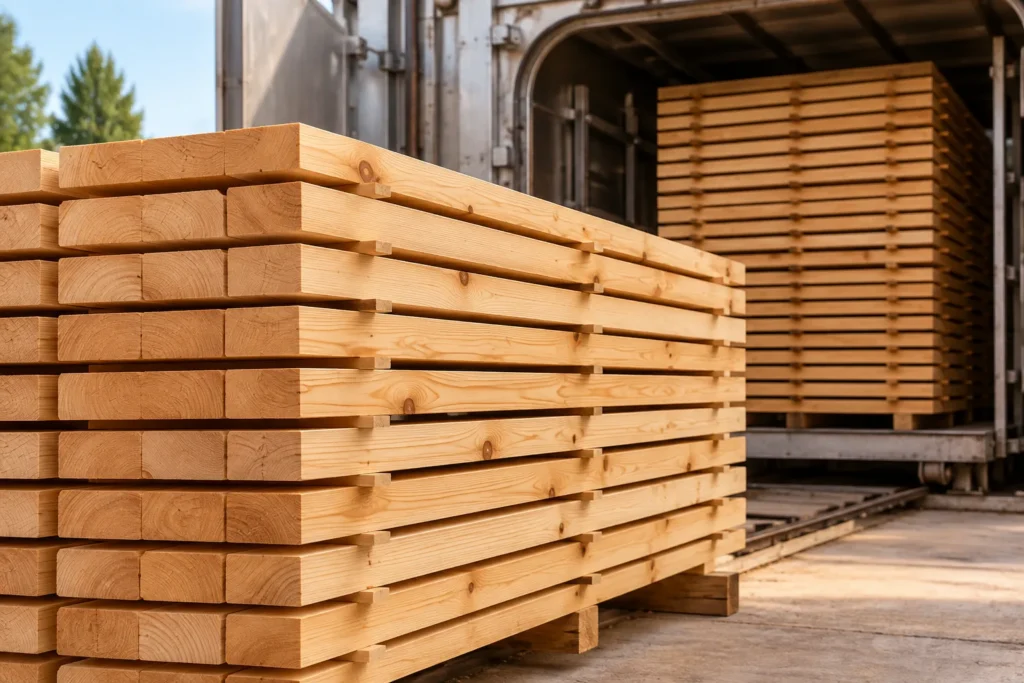
Kiln-dried lumber is wood that has been dried inside a controlled chamber called a kiln.
The kiln allows the manufacturer to control temperature, humidity, and airflow during the drying process. This provides greater control over how quickly moisture leaves the lumber.
The drying schedule can be adjusted according to the wood species, thickness, moisture content, and intended use.
The goal is to bring the lumber to a suitable moisture content while reducing the risk of excessive checking, cracking, and other drying problems.
When comparing Air-Dried vs Kiln-Dried Lumber, controlled moisture reduction is one of the biggest differences between the two methods.
The basic difference is how the moisture is removed.
Air-dried lumber is stacked in a location where natural air movement gradually removes moisture. The process depends heavily on weather and environmental conditions.
Kiln-dried lumber is placed inside a controlled chamber. Heat, airflow, and humidity can be adjusted to create a specific drying schedule.
Air drying generally takes longer because the manufacturer has less control over environmental conditions.
Kiln drying can be completed more quickly and can achieve moisture levels that may be difficult to reach through air drying alone.
However, faster drying is not automatically better. The drying schedule needs to be appropriate for the wood species and thickness.
Moisture content is one of the most important factors when comparing Air-Dried vs Kiln-Dried Lumber.
Wood naturally gains and loses moisture depending on its surroundings. When lumber loses moisture, it can shrink. When it absorbs moisture, it can expand.
Air-dried lumber can retain more moisture than kiln-dried lumber, depending on the climate and how long it has been dried.
Kiln drying allows manufacturers to target a specific moisture range that is appropriate for the intended application.
For interior projects, achieving a moisture content suitable for the indoor environment can be particularly important. This helps reduce excessive movement after installation.
The ideal moisture content is not identical for every project. Lumber intended for an indoor environment may require different moisture characteristics than lumber intended for an exterior application.
Dimensional stability refers to how much wood changes in size and shape as its moisture content changes.
This is an important consideration in Air-Dried vs Kiln-Dried Lumber because lumber that continues losing significant moisture after installation can experience movement.
Kiln-dried lumber has already undergone a controlled drying process, which can make it more predictable when properly matched to its final environment.
Air-dried lumber can also be stable, particularly when it has been properly dried and stored. However, its final moisture content can depend more heavily on the surrounding climate and drying conditions.
Neither type of lumber is completely immune to movement. Wood remains a natural material that responds to changes in humidity.
Air drying has several advantages.
Air drying does not require the same controlled equipment and energy used by a kiln. This can make it an attractive option for certain lumber producers and projects.
Air drying is a traditional method that has been used for generations. Some woodworkers prefer air-dried lumber for certain projects because of its natural drying process.
Air-dried lumber can be useful for furniture, woodworking, beams, and other applications where the moisture content is appropriate for the intended environment.
Some lumber is air dried first and then kiln dried. Initial air drying can remove a significant amount of moisture before the lumber enters the kiln.
Kiln drying also provides several important advantages.
A kiln provides control over temperature, humidity, and airflow. This allows manufacturers to follow a drying schedule designed for the specific wood.
Kiln drying can reduce moisture more quickly than natural air drying under many conditions.
Because the drying process is controlled, kiln-dried lumber can offer more predictable moisture characteristics when properly processed.
Kiln-dried lumber is commonly used for furniture, flooring, cabinetry, interior construction, and other projects where moisture content and dimensional stability are important.
Furniture requires careful consideration of moisture content because individual boards are joined together to create a finished product.
If the wood continues to shrink significantly after construction, joints can move and surfaces can change shape.
Kiln-dried lumber can be a practical choice for many furniture applications because its moisture content can be controlled before the boards are manufactured into furniture.
Air-dried lumber can also be used for furniture, especially when it has been properly dried and acclimated to the environment where the furniture will be made and used.
The important factor is not simply whether the wood was air dried or kiln dried. The actual moisture content and how the lumber is stored and acclimated also matter.
Flooring is particularly sensitive to moisture changes because boards are installed across relatively large areas.
If flooring is installed before the wood reaches an appropriate moisture condition, it can move after installation.
Kiln-dried lumber is commonly considered for flooring because the drying process provides greater control over moisture content.
Air-dried wood can also be suitable for some flooring projects if it has been properly dried, conditioned, and prepared for the installation environment.
For flooring, measuring moisture content before installation is an important step regardless of the drying method.
Outdoor applications require a slightly different approach.
Decking, siding, fences, pergolas, and other exterior projects are exposed to changing humidity, rain, sunlight, and temperature.
Kiln drying does not automatically make lumber waterproof or rot resistant. The natural durability of the wood species, treatment, design, installation, and maintenance all affect outdoor performance.
Air-dried lumber can also be used outdoors when the species and moisture characteristics are appropriate.
When comparing Air-Dried vs Kiln-Dried Lumber for an outdoor project, consider the specific species and how the lumber will be exposed to weather rather than choosing based only on the drying method.
Not necessarily.
Kiln drying itself does not guarantee that lumber will last longer than air-dried lumber.
Longevity depends on several factors, including wood species, natural durability, moisture exposure, installation, maintenance, insects, fungi, and environmental conditions.
For example, a naturally durable wood species may perform well outdoors because of its inherent properties, regardless of whether it was air dried or kiln dried.
The drying process primarily affects moisture content and stability rather than automatically determining the service life of the wood.
Air-dried lumber can sometimes cost less because it does not require the same kiln equipment and energy-intensive controlled drying process.
However, pricing varies widely depending on the species, grade, dimensions, availability, region, processing, and supplier.
Kiln-dried lumber can cost more because of the additional processing involved.
When considering Air-Dried vs Kiln-Dried Lumber, it is important to look at the total project requirements rather than choosing solely based on initial lumber price.
A less expensive material may not be the right choice if its moisture content requires additional preparation or creates problems during installation.
Start by considering where the lumber will be used.
For interior furniture, flooring, cabinetry, and construction, moisture content and dimensional stability are especially important. Kiln-dried lumber may be a practical choice when you need greater control over these characteristics.
For certain outdoor structures, beams, woodworking projects, and traditional applications, air-dried lumber may be suitable when properly dried and stored.
You should also consider the wood species. Different species respond differently to drying, and some require more careful drying schedules than others.
Ask your lumber supplier about moisture content, grade, drying method, storage conditions, and recommended applications.
| Feature | Air-Dried Lumber | Kiln-Dried Lumber |
| Drying method | Natural air circulation | Controlled kiln |
| Drying speed | Generally slower | Generally faster |
| Moisture control | Depends on environment | More controlled |
| Energy requirements | Generally lower | Generally higher |
| Dimensional predictability | Depends on drying and acclimation | Generally more controlled |
| Common uses | Woodworking, beams, some exterior projects | Furniture, flooring, construction, woodworking |
| Processing | Natural drying | Controlled drying |
| Cost | Can be lower | Can be higher |
The table provides a general comparison. Actual performance depends on the species, moisture content, grade, storage, and intended application.
Yes. Air drying and kiln drying do not always have to be separate choices.
In some cases, lumber is initially air dried and then placed in a kiln to further reduce and control its moisture content.
This can help remove additional moisture while allowing the drying process to be managed more carefully.
The appropriate approach depends on the species, thickness, starting moisture content, and desired final moisture level.
Yes, but it should have an appropriate moisture content for the indoor environment and may need additional acclimation before installation.
Yes, but kiln drying alone does not make wood weatherproof. The species, durability, treatment, installation, and exposure conditions also need to be considered.
Neither method is universally better. The appropriate method depends on the hardwood species, thickness, intended use, and required moisture content.
Not reliably. The drying method is best confirmed through supplier information, product documentation, or other records.
Yes. Air-dried lumber can sometimes undergo additional kiln drying to further reduce and control its moisture content.
Air drying does not automatically make wood stronger. Wood strength depends on species, density, grain, moisture content, grade, and other characteristics.
No. Kiln drying reduces moisture to a target level rather than completely removing all moisture. Wood will always contain some moisture.
Both can be workable, but properly dried lumber with a suitable moisture content can generally provide more predictable results during cutting, sanding, and machining.
They can be used together in some projects, but their different moisture contents and movement characteristics should be considered before installation or assembly.
Use a reliable moisture meter and compare the reading with the moisture requirements for the specific application and environment. A lumber supplier can also provide guidance on the appropriate moisture content.
Understanding Air-Dried vs Kiln-Dried Lumber is important when selecting wood for a construction or woodworking project.
Air drying relies on natural environmental conditions and generally takes longer. It can be suitable for various woodworking, structural, and outdoor applications when the lumber has been properly dried and stored.
Kiln drying uses controlled temperature, humidity, and airflow to reduce moisture more predictably. It is widely used for applications where moisture content and dimensional stability are important.
The right choice depends on the wood species, project type, moisture requirements, budget, and final environment.
When evaluating Air-Dried vs Kiln-Dried Lumber, do not look only at the drying method. Ask about the lumber’s actual moisture content, grade, species, storage conditions, and intended application. These factors can be just as important when choosing lumber that will perform well over time.