

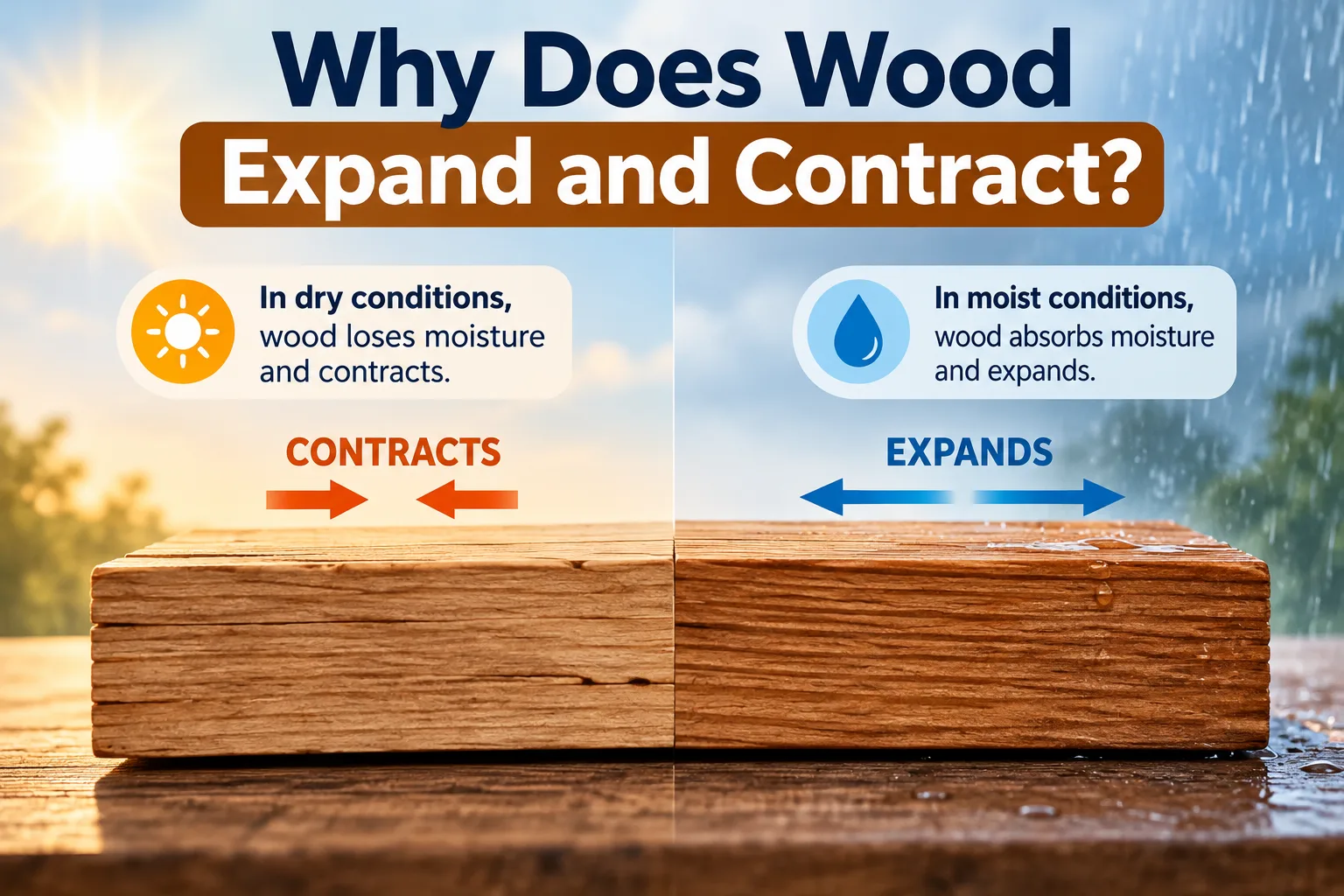
Why Does Wood Expand and Contract?
Best Sellers
Posted on October 25, 2026 at 10:16 pm
Table of Content
Wood is a natural material, and one of its most important characteristics is that it responds to changes in moisture. Unlike many manufactured materials, wood can change size as the moisture content around it changes.
This is why a wooden deck may develop small gaps, hardwood flooring can change slightly between seasons, and doors or cabinets may fit differently at different times of the year.
But why does wood expand and contract?
The main reason is moisture. Wood absorbs and releases moisture from the surrounding air. As its moisture content changes, its dimensions can change too.
Understanding this natural movement is important when choosing, installing, and maintaining wood for decks, siding, flooring, furniture, fences, and other projects.
What Causes Wood to Expand and Contract?
Wood expands when it absorbs moisture and contracts when it loses moisture.
Trees naturally contain water. After a tree is harvested, the wood is dried through processes such as air drying or kiln drying. Even after it is dried, wood does not become completely inactive.
Wood continues to exchange moisture with the surrounding environment.
When the surrounding air is humid, wood can absorb moisture. When the air is dry, wood can release moisture.
This process is called moisture equilibrium.
The amount of moisture in wood changes until it reaches a balance with the surrounding environment.
Does Wood Expand in Humidity?
Yes, wood generally gains moisture when exposed to humid conditions.
As the moisture content increases, wood can expand. This movement is more noticeable in some directions than others because of the way wood cells are arranged.
The amount of movement depends on the species, grain direction, moisture change, and how the wood was dried.
This is one reason why wood products need room for natural movement during installation.
Does Wood Shrink in Dry Weather?
Yes.
During dry conditions, wood can lose moisture to the surrounding air. As it loses moisture, it generally shrinks.
This can happen during dry seasons, in heated indoor spaces, or when wood is exposed to very dry air for extended periods.
For example, hardwood flooring may develop small gaps during a dry winter and close again as humidity increases.
This does not necessarily mean the flooring has failed. Some seasonal movement is normal for natural wood.
Wood Does Not Expand Equally in Every Direction
One of the most important things to understand about wood movement is that it is not uniform in all directions.
Wood movement is usually described in three directions:
- Longitudinal, along the length of the grain
- Radial, from the center of the tree outward
- Tangential, around the growth rings
Movement along the length of the grain is usually very small.
Movement across the grain is much greater.
Tangential movement is generally greater than radial movement.
This difference is one reason boards can change shape or develop cracks as moisture levels change.
Why Does Wood Warp?
Wood can warp when different parts of a board gain or lose moisture at different rates.
Common types of wood movement include:
Cupping
Cupping occurs when the edges of a board move differently from the center, causing the board to curve across its width.
Bowing
Bowing occurs when a board curves along its length.
Crooking
Crooking happens when the board curves from one side to the other along its length.
Twisting
Twisting occurs when different corners of a board move in different directions, causing the board to rotate or twist.
These changes can be influenced by moisture differences, grain structure, board orientation, drying conditions, and how the wood is installed.
Why Does Wood Crack?
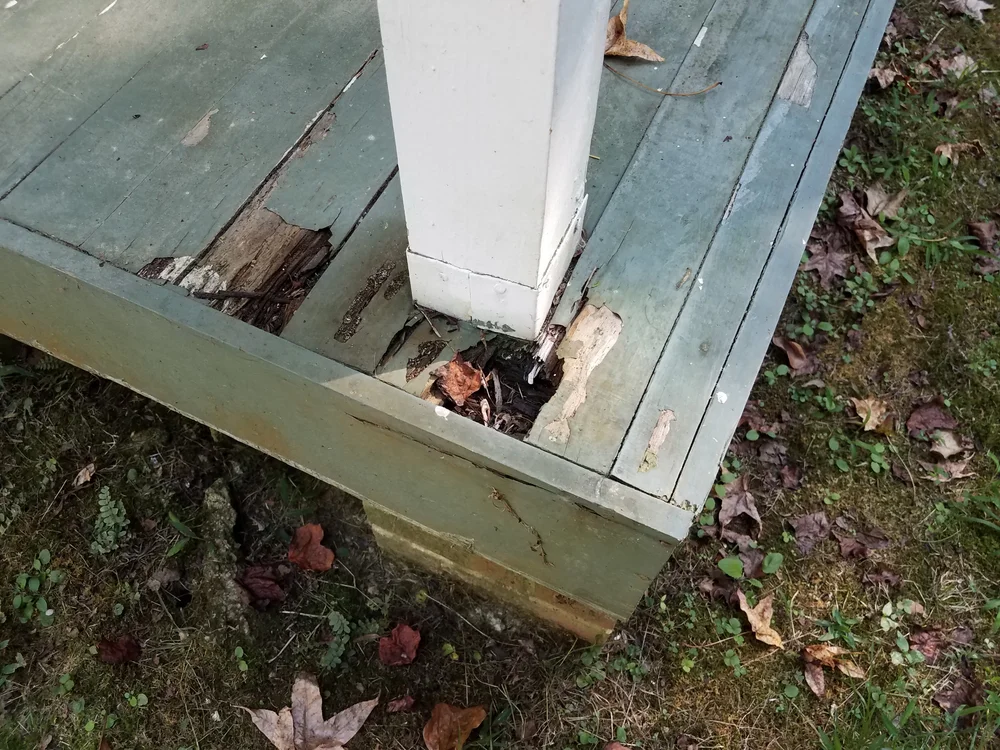
Wood can crack or split when it loses moisture and shrinks.
If the outer portion of a board dries faster than the inside, stress can develop within the wood. This can contribute to checking, splitting, or surface cracks.
Fast changes in moisture can be particularly stressful.
This is why proper drying and acclimation are important before using wood for many interior applications.
What Is Wood Moisture Content?
Moisture content refers to the amount of water contained in wood compared with the oven-dry weight of the wood.
It is usually expressed as a percentage.
For example, if a piece of wood has a moisture content of 12%, the amount of water in the wood represents 12% of its oven-dry weight.
Moisture content is important because it helps determine how stable wood will be in a particular environment.
Wood intended for interior use generally needs to reach a moisture content that is appropriate for the indoor environment where it will be installed.
Outdoor wood will experience much larger changes because it is exposed to changing humidity, rain, sunlight, and temperature.
What Is Equilibrium Moisture Content?
Wood naturally tries to reach a moisture level that matches the surrounding temperature and relative humidity.
This moisture level is known as equilibrium moisture content, or EMC.
For example, wood stored in a dry indoor environment will gradually lose moisture until it reaches equilibrium with that environment.
Wood stored outdoors in a humid climate will behave differently.
This is why wood should be stored and acclimated appropriately before installation.
Does Temperature Make Wood Expand?
Temperature can affect wood dimensions, but for most everyday applications, moisture-related movement is much more significant than thermal expansion.
Wood can expand when heated and contract when cooled, but the dimensional changes caused by changes in moisture content are generally more important when dealing with wood products.
This is especially true for solid wood and wood products used in environments where humidity changes significantly.
Which Wood Species Expand and Contract the Most?
Different wood species have different movement characteristics.
Some species are relatively stable, while others show more dimensional movement as moisture changes.
The way a board is cut also affects its movement.
Quarter-sawn boards generally behave differently from flat-sawn boards because the grain orientation is different.
This does not mean one type of cut is always better. The appropriate choice depends on the application, appearance, stability requirements, and budget.
Why Is Wood Acclimation Important?
Acclimation allows wood to adjust to the environment where it will be installed.
This is particularly important for products such as hardwood flooring.
If wood is installed while it has a moisture content very different from the surrounding environment, it may continue to gain or lose moisture after installation.
That can lead to movement, gaps, swelling, cupping, or other problems.
The exact acclimation requirements depend on the wood product and manufacturer instructions.
How Does Wood Movement Affect Decking?
Outdoor decking experiences regular changes in moisture.
Rain, humidity, sunlight, temperature, and seasonal weather can all affect the moisture content of deck boards.
Wood decking can therefore expand and contract over time.
Proper spacing between boards is important because it allows room for natural movement and helps water drain from the deck surface.
Different decking species can behave differently, so installation recommendations should always be based on the specific wood being used.
How Does Wood Movement Affect Siding?
Wood siding also responds to moisture changes.
Boards need to be installed in a way that allows for normal movement without creating excessive stress.
Proper installation includes attention to:
- Board spacing
- Fastener placement
- End joints
- Moisture protection
- Paint or finish
- Ventilation
- Drainage
Keeping water away from the back and edges of wood siding can help improve long-term performance.
Can You Stop Wood From Expanding and Contracting?
You cannot completely stop natural wood movement.
However, you can reduce and manage it.
Good practices include:
- Properly drying the wood
- Selecting an appropriate species
- Allowing wood to acclimate
- Maintaining suitable indoor humidity
- Installing wood according to manufacturer recommendations
- Protecting outdoor wood from excessive moisture
- Using appropriate finishes
- Providing adequate expansion space
The goal is not to prevent wood from moving. The goal is to allow it to move without causing damage.
How Can You Reduce Wood Movement?
For indoor projects, maintaining relatively stable humidity can help reduce seasonal movement.
For outdoor projects, proper design and installation are especially important.
Good drainage, ventilation, adequate spacing, and suitable fasteners can help wood handle normal changes in moisture.
Choosing a naturally stable wood species can also be useful when dimensional stability is particularly important.
Frequently Asked Questions
Does all wood expand and contract at the same rate?
No. Wood species, grain direction, moisture content, board size, and how the wood was cut can all affect how much it moves.
Does pressure-treated wood expand and contract?
Yes. Pressure-treated wood is still a natural wood product, so it can gain and lose moisture and change dimensions.
Does painted wood still expand and contract?
Yes. Paint can slow moisture exchange and provide protection, but it does not completely stop natural wood movement.
Does thicker wood expand less than thinner wood?
Not necessarily. Thickness affects how quickly moisture moves through the wood, but dimensional movement also depends on species, grain orientation, and moisture change.
Does plywood expand and contract like solid wood?
Yes, but plywood generally has less dimensional movement across its surface than solid wood because its layers are arranged with alternating grain directions.
Can wood expand enough to break or damage surrounding materials?
It can cause problems if there is not enough room for movement. Wood flooring, siding, decking, and other installations need appropriate spacing and clearances.
Does unfinished wood absorb moisture faster?
Generally, exposed unfinished wood can exchange moisture with its surroundings more readily than wood protected by an effective finish.
Does wood expand more in summer or winter?
In many climates, wood tends to gain moisture during humid periods and lose moisture during dry periods. The actual pattern depends on the local climate and indoor conditions.
Can storing wood incorrectly cause future movement?
Yes. Storing wood in conditions very different from where it will be installed can cause its moisture content to change significantly before installation.
How can you measure the moisture content of wood?
A wood moisture meter can be used to estimate moisture content. The meter should be appropriate for the wood species and used according to the manufacturer’s instructions.
Conclusion
Wood expands and contracts mainly because it absorbs and releases moisture.
Humidity, rainfall, indoor heating, ventilation, and other environmental conditions can change the moisture content of wood. As that moisture content changes, the wood changes size.
This movement is a natural characteristic of wood, not necessarily a sign that something is wrong.
The key is understanding how wood behaves and designing around that movement. Proper drying, acclimation, installation, spacing, moisture management, and species selection can all help wood perform better over time.
Whether you are working with decking, siding, flooring, furniture, fencing, or another wood product, allowing for natural movement is one of the most important parts of working successfully with this versatile material.